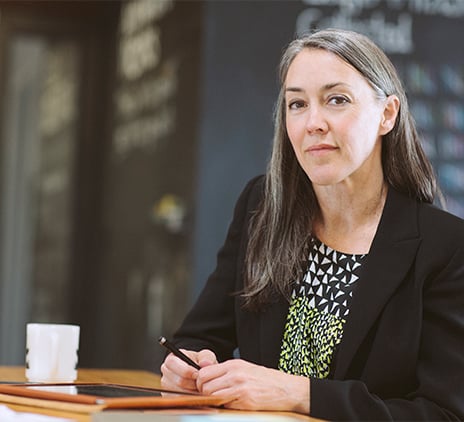
Our 2026 Women in Business report explores the mid-market’s commitment to DE&I and gender diversity in leadership and the impact this has on business success.
Discover the European Central Bank's supervisory priorities for 2026-2028, focusing on strengthening banks' resilience to geopolitical and macro-financial risks and enhancing operational and ICT capabilities. Learn how Grant Thornton can help your organisation navigate regulatory expectations and turn compliance into strategic advantage.
Obligations, deadlines, and requirements for Workplace Sustainable Mobility Plans for companies, with specific and stricter criteria in Catalonia.
A shift in risk management priorities Today’s senior leaders face a range of complex, interconnected and fast-evolving risks. Few of these are as critical and so poorly understood as the risk of cyber attack.
China’s One Belt, One Road outbound investment strategy presents a wealth of opportunity along major global land and maritime trade routes. But how can business owners outside China take advantage?
Nobody thought that complying with the Base Erosion and Profit Shifting (BEPS) transfer pricing analysis and documentation demands would be easy. Yet, the opening year has proved to make greater demands and has required more attention than many multinational enterprises (MNEs) had anticipated.
International taxation is undergoing the biggest shake-up for a generation. The already complex world of transfer pricing is at the front and centre of these disruptive changes, both in the rules that govern it and in the heightened scrutiny it now faces.
Across the globe, companies’ tax affairs are facing increasing scrutiny from regulators, communities and clients. Read our latest insights ranging from BEPS to VAT.
Up until the Summer of 2016 it was mostly negative views about the world economy that dominated market sentiment: many thought that the Chinese economy was going to decelerate abruptly sooner rather than later; the US economy seemed poised to enter recession because of the problems related to the energy sector; Brexit was seen as the first step that would end up leading to the collapse of the European Union; secular stagnation seemed to be the name of the game, meaning that the global economy appeared to be stuck in an equilibrium of very low growth and with aggregate demand remaining structurally weak and unable to create any kind of inflationary pressure…
A rise in business optimism means more organisations are on the lookout for talent, but with demand outstripping supply, where does it leave small and medium-sized enterprises (SMEs)?
The last year has seen global business take one step forward but one step back when it comes to gender diversity in leadership. The percentage of businesses around the world with at least one woman in senior management has increased significantly, rising from 66% to 75% in the last year. But at the same time the proportion of senior roles held by women has marginally declined.
Cross-border merger and acquisition opportunities are increasing as healthy company financials in many economies drive an appetite for deals. However, while cross-border transactions can generate new market opportunities, they often bring heightened risk and a range of challenges.
When faced with business challenges, the response is often that companies need to be more agile. But what does it mean and how do you increase agility?
Distributed ledgers have grown beyond their cryptocurrency roots and the once-emerging technology is at last ready for your business to put it to work right now.
"Blockchain is not the solution to everything," warns Wayne Pisani, head of financial services at Grant Thornton Malta. "Rather, it is typically part of a solution to a situation you might already have and are using multiple processes which you want to simplify."